How Many Board Feet in a 2×6×8?
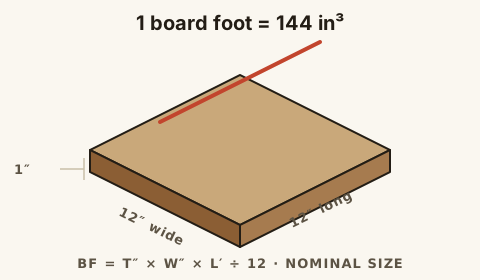
2×6 board feet by length
| Size | Board feet | Pieces per 100 bf |
|---|---|---|
| 2×6×6 | 6.00 | 17 |
| 2×6×8 | 8.00 | 13 |
| 2×6×10 | 10.00 | 10 |
| 2×6×12 | 12.00 | 9 |
| 2×6×14 | 14.00 | 8 |
| 2×6×16 | 16.00 | 7 |
The 2×6×8 is typical stock for short joists, headers, deck framing. Ordering for a whole plan? It takes 13 pieces of 2×6×8 to reach 100 board feet — tally the real cut list, mixed sizes and all, in the board foot calculator and print it as a slip for the yard.
Worth remembering: dimensional softwood like this usually sells by the piece, not by the board foot — but the BF figure still matters for comparing costs across sizes, estimating framing packages, and talking to mills. Hardwood in random widths is where per-BF pricing rules; see the price table for what species run per board foot.
Why a 2×6 isn't really 2″ × 6″
Every 2×6×8 starts life rough-sawn at (close to) its nominal size, then loses material to drying and surfacing — which is how a 2×6 arrives at the store measuring 1½″ × 5½″. The nominal-size convention is written into the American Softwood Lumber Standard (NIST PS 20), and it governs everything downstream: the label on the rack, the invoice, span tables and this page's board-foot figure of 8 bf. Measure a 2×6×8 with calipers and punch the actual size into a calculator, and you'll come up about a quarter short of what the yard will charge you for — always figure nominal.
What does a 2×6×8 weigh?
Handy when you're loading the truck: at 8 board feet, a kiln-dried SPF (spruce-pine-fir) 2×6×8 runs about 18.7 lb, and a denser southern yellow pine version about 24 lb. Fresh, still-wet stock is heavier — roughly 22.7 lb (SPF green) to 36.7 lb (SYP green). A 50-piece framing lift of 2×6×8s is therefore on the order of 935–1200 lb dry, which is real payload. Species-by-species figures live in the lumber weight calculator.