Board Feet ↔ Linear Feet Calculator
Board feet measure volume; linear (also spelled lineal) feet measure length only. Converting between them needs the board's cross-section — set the width and thickness, then convert either direction.
The conversion, explained
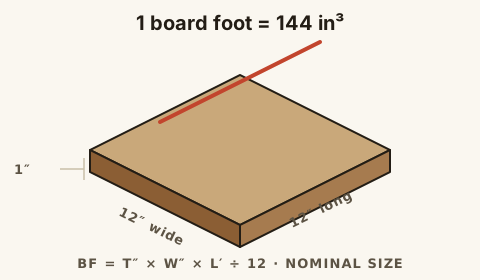
One board foot is 144 cubic inches. Stretch that volume into a board of a given cross-section and the length falls out: LF = BF × 12 ÷ (width″ × thickness″), and back the other way, BF = LF × width″ × thickness″ ÷ 12. The same 10 board feet makes 20 lineal feet of 1×6, 10 feet of 2×6, or 40 feet of skinny 1×3 — which is why a price "per linear foot" means nothing until you know the size it describes.
When each unit shows up
- Board feet — rough hardwood at the sawmill or dealer; random widths make volume the only fair meter. (That's the main calculator.)
- Linear feet — trim, moulding, decking and dimensional stock where the profile is fixed and only length varies.
- Comparing a $/LF trim quote against $/BF rough stock? Convert both to board feet first — it's the only apples-to-apples.
Common quick conversions at 1″ (4/4) thickness: a linear foot of 1×4 is 0.33 bf, of 1×6 is 0.5 bf, of 1×8 is 0.67 bf, of 1×12 exactly 1 bf. Double all of it for 8/4 stock. For coverage math instead of length, see BF ↔ square feet; for a standalone length tool, the linear foot calculator.
FAQ
Lineal vs linear — any difference?
None. The lumber trade uses both spellings for the same idea: length along the piece, cross-section ignored.
How many linear feet in 100 board feet?
Depends on the stock: 200 LF of 1×6, 100 LF of 2×6, 300 LF of 1×4. Set the cross-section above and read it off.
Quick reference: board feet per linear foot
| Stock (nominal) | bf per LF | LF per 10 bf |
|---|---|---|
| 1×4 | 0.33 | 30 |
| 1×6 | 0.50 | 20 |
| 1×8 | 0.67 | 15 |
| 1×12 | 1.00 | 10 |
| 2×4 | 0.67 | 15 |
| 2×6 | 1.00 | 10 |
| 2×12 | 2.00 | 5 |
All figures use nominal cross-sections per the American Softwood Lumber Standard. Hardwood in quarters works the same way: a linear foot of 8/4 stock 6″ wide is 1 bf even.